If you want room to breathe without giving up access to Tampa Bay, Odessa deserves a close look. This part of Pasco County appeals to buyers who want a different kind of luxury: more land, more privacy, and in many cases, direct lake frontage or estate-scale lots. If you are weighing a lakefront home, a large parcel, or both, this guide will help you focus on what matters most before you buy. Let’s dive in.
Why Odessa Stands Out
Odessa is a small census-designated place in Pasco County with a population of 8,080, according to the U.S. Census Bureau. What makes it notable is not just size, but setting. Pasco County identifies the Odessa and S.R. 54 corridor as a major area of suburban growth, while also preserving substantial land for conservation.
That combination shapes the buyer experience. In Odessa, you are often comparing privacy, acreage, lake access, and long-term land utility instead of choosing between standard subdivision homes. Pasco County also reports thousands of lakes, ponds, and retention features, along with major conservation lands that help parts of western Pasco feel open and low density.
What Lakefront Living Means Here
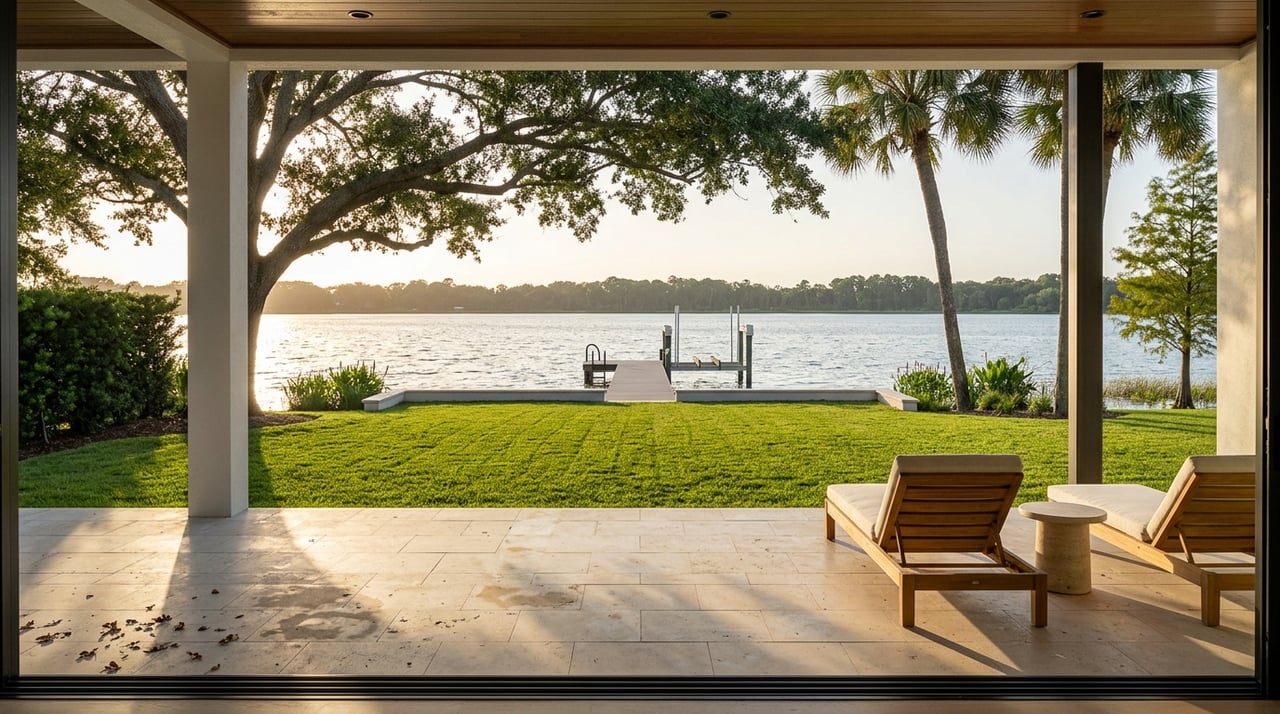
Lakefront living in Odessa is not one-size-fits-all. The area includes a mix of smaller private lakes, such as Geneva Lake, as well as other private lakes in the Odessa area like Anderson Lake, Lake Minniola, and Lake Seminole identified through WaterAtlas.
That matters because the lake itself affects how the property lives day to day. A smaller private lake may offer a quiet, tucked-away feel, while a somewhat larger lake can create broader views, more shoreline separation, and more flexibility for recreation. The right fit depends on whether you value calm scenery, usable waterfront, or a mix of both.
Because these lakes are designated private, access should never be assumed. Before you move forward, confirm whether access is deeded, limited to owners, or governed by a community arrangement. You should also verify any rules tied to docks, lifts, shoreline work, and guest use.
Estate Zoning Shapes Your Options
In Odessa, lot size alone does not tell the full story. Zoning, frontage, setbacks, and overlays can all affect what you can build, add, or change over time.
Pasco County’s E-R Estate-Residential district is designed as a transition between agricultural areas and suburban development. Under the current code, it allows single-family detached homes, private garages, pools and cabanas, accessory dwelling units, and noncommercial boat slips, piers, or private docking facilities when required approvals are obtained. The district includes a 1-acre minimum lot area, 125-foot minimum lot width, 50-foot front and rear setbacks, 25-foot side setbacks, 35% maximum building coverage, and 45-foot maximum height, as outlined in the county land development code update.
ER-2 is more restrictive and targets very low-density estate development. It requires a 2.5-acre minimum lot area and 200-foot minimum frontage, along with the same setback structure and 35% coverage cap. For you as a buyer, that means two similarly sized parcels can have very different buildable envelopes depending on frontage, shape, and placement.
Wetlands and Buildable Area Matter
One of the biggest mistakes buyers make with estate property is focusing on gross acreage instead of usable acreage. In Odessa, that can be a costly oversight.
Pasco County’s Wetlands/Lakes Overlay is used to depict naturally occurring lakes and wetlands, and the county notes that on-site evaluation is required to confirm their existence and extent on a parcel. Development within those areas may be limited by federal, state, and local rules.
That is why survey review is critical. A parcel may look expansive online, but setbacks, wetlands, lake buffers, and frontage requirements can narrow what is actually usable. If you are planning a guest house, larger outdoor living area, detached garage, or dock improvements, this review should happen early.
Boating and Recreation Questions to Ask
If lake access is part of the appeal, you should understand both legal use and practical use. Not every lakefront parcel supports the same boating or recreation setup.
The Florida Fish and Wildlife Conservation Commission states that anyone born on or after January 1, 1988, who operates a vessel powered by 10 horsepower or more must carry a boating safety education card. FWC also treats canoes, kayaks, and paddleboards as vessels with basic safety requirements.
From a property standpoint, your checklist should include:
- Whether the lake is private or public
- Whether the lot can support a legal dock, lift, or launch area
- What type of watercraft the lake can realistically support
- Whether there are any use restrictions tied to access or shoreline improvements
For many buyers, the best lakefront home is not just about views. It is about whether the shoreline functions the way you want it to.
Water Levels Can Change
A waterfront lot can look very different in a wet season than it does after an extended dry period. In Odessa, that is not a minor detail.
The Southwest Florida Water Management District sets minimum and guidance levels for lakes, and Pasco County’s emergency planning documents note that many county lakes and retention ponds can shrink during dry periods, with some drying up completely. This means water depth near the shoreline, visual openness, and day-to-day usability may vary over time.
If you are evaluating a lakefront property, it is smart to ask how the shoreline performs seasonally. Look at bank condition, depth near the edge, current waterline, and how much of the lot’s value depends on sustained water levels.
Flood Zone Review Is Essential
Flood review should be part of your first-round due diligence, not something left until the end. Even buyers focused on luxury finishes and land value need to understand insurance and site risk.
The official source for hazard mapping is FEMA’s Flood Map Service Center. Pasco County participates in the National Flood Insurance Program, so mapped flood zones can affect insurance costs, lender requirements, and future improvement plans.
Even if a home is not in a high-risk flood designation, you should still confirm the exact flood zone for the house site, low-lying areas, and waterfront improvements. A property can have attractive frontage but still include sections where future work becomes more complicated.
Conservation Land Supports Long-Term Appeal
One reason Odessa continues to attract estate buyers is the area’s open feel. Nearby conservation land can preserve that character over time.
A strong example is Starkey Wilderness Preserve, which SWFWMD describes as one of the largest undeveloped tracts in Pasco County. It includes trails, fishing, equestrian use, and a major wetland system that helps protect water quality and recharge.
For buyers, adjacency or proximity to preserved land can be a real value driver. It may enhance privacy, reduce the sense of crowding, and support a more natural setting around estate property.
Utilities Need Verification
Utility service is another point that can separate a smooth ownership experience from an expensive surprise. Estate buyers should verify service early rather than assume public connections are in place.
Pasco County’s water service area map shows multiple public and private providers across the county. For a larger property, utility type can affect irrigation strategy, landscaping costs, future additions, and maintenance planning.
This is especially important if you are comparing multiple parcels. Two estate properties at similar price points may differ meaningfully based on utility setup and long-term operating ease.
Odessa Buyer Checklist
Before you buy a lakefront or estate property in Odessa, make sure you can answer these questions clearly:
- Is the lake private or public?
- What kind of access comes with the property?
- Can the lot legally support a dock or lift?
- What zoning district applies to the parcel?
- How much of the lot is truly buildable after setbacks and overlays?
- Is any part of the site in a mapped flood zone?
- What utility systems serve the property?
- How does the shoreline look in different weather patterns or seasons?
These are not minor details. They directly affect usability, resale strength, and your long-term enjoyment of the property.
Final Takeaway
Buying in Odessa is often less about square footage and more about land intelligence. The best opportunities usually come down to a disciplined read of frontage, access, zoning, water conditions, buildable area, and long-term privacy.
That is where strategic guidance matters. If you want help evaluating Odessa lakefront and estate properties with a sharper eye for usability, negotiation, and hidden upside, connect with The Marino Group & TMG Real Estate, LLC. You will get a boutique, execution-driven approach built for high-value decisions.
FAQs
What makes Odessa appealing for lakefront and estate buyers?
- Odessa offers a mix of privacy, larger lots, private lakes, and access to open land in a part of Pasco County shaped by both growth and conservation.
What should buyers know about private lakes in Odessa?
- Buyers should confirm whether lake access is deeded, owner-only, or community-based, and verify any rules for docks, lifts, shoreline work, and recreational use.
What is the minimum lot size for estate zoning in Pasco County?
- In Pasco County, the E-R district requires a 1-acre minimum lot area, while ER-2 requires a 2.5-acre minimum lot area, along with frontage and setback rules.
Why is buildable area important for Odessa estate properties?
- Buildable area matters because setbacks, wetlands, frontage, and lake overlays can reduce how much of a parcel you can actually use or improve.
How can buyers check flood zones for Odessa lakefront homes?
- Buyers can review official hazard information through FEMA’s Flood Map Service Center and should confirm both insurance implications and any site-specific constraints.
Why should buyers verify utilities before buying in Odessa?
- Utility service can vary by parcel, and the exact setup may affect landscaping, irrigation, maintenance costs, and future additions to the property.